



Celebrating the Professionals Who Answer the Call: National Public Safety Telecommunicators Week
By Arielle Roth, Assistant Secretary of Commerce for Communications and Information
During National Public Safety Telecommunicators Week (April 12 to 18), we recognize the dedicated professionals who answer 9-1-1 calls and coordinate lifesaving responses every hour of every day. They are the backbone of our nation’s emergency response system.
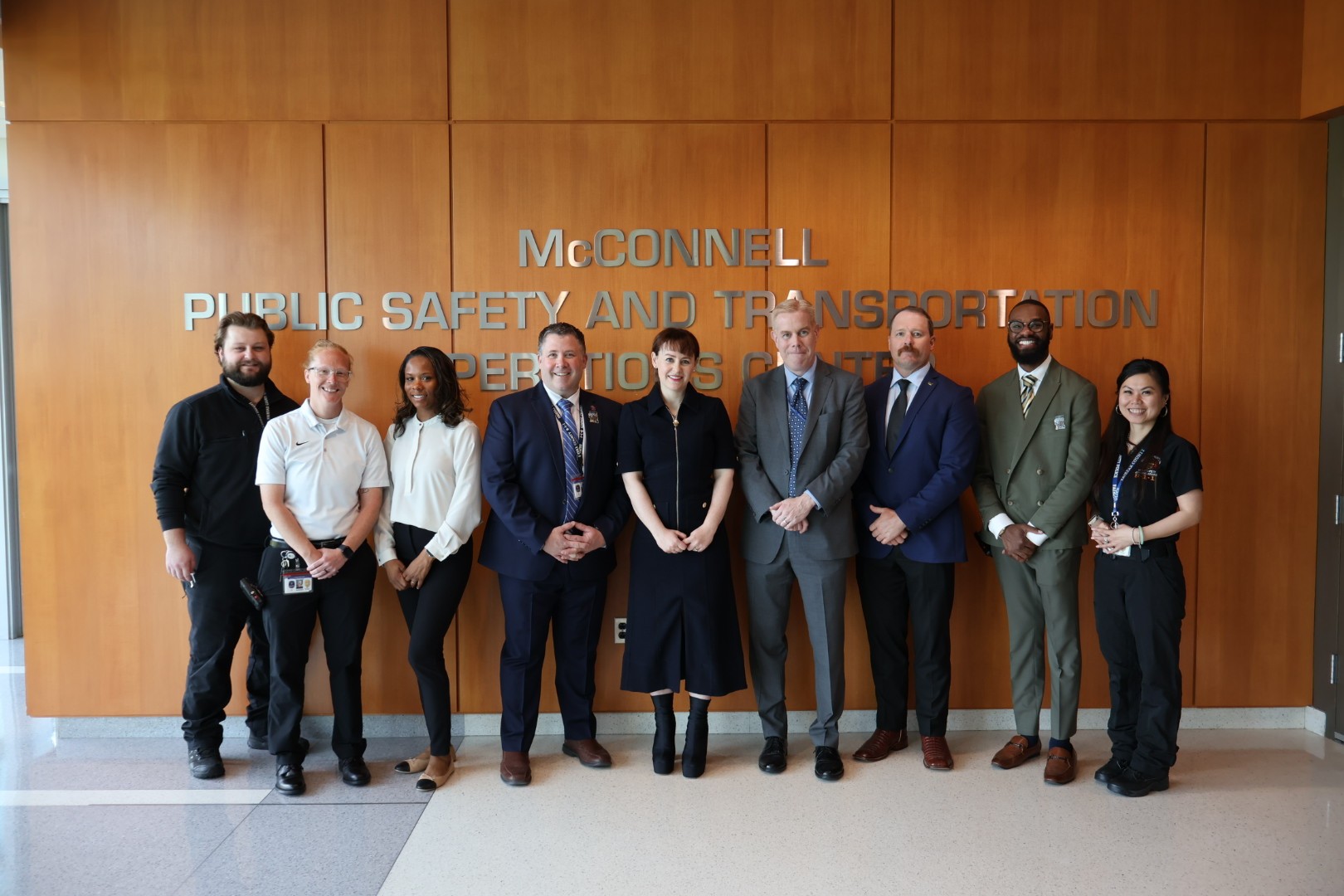
To mark the week, and see this work firsthand, I toured the Fairfax County, Virginia, Department of Public Safety Communications (DPSC), where we saw how AI tools are helping triage non-emergency calls—which make up about half of the center’s total call volume—reducing hold times and allowing telecommunicators to focus on the most urgent situations.
This visit builds on a recent trip to the Dallas Police Department’s 9-1-1 Center, where I met with telecommunicators to hear more about what they need to do their jobs effectively.
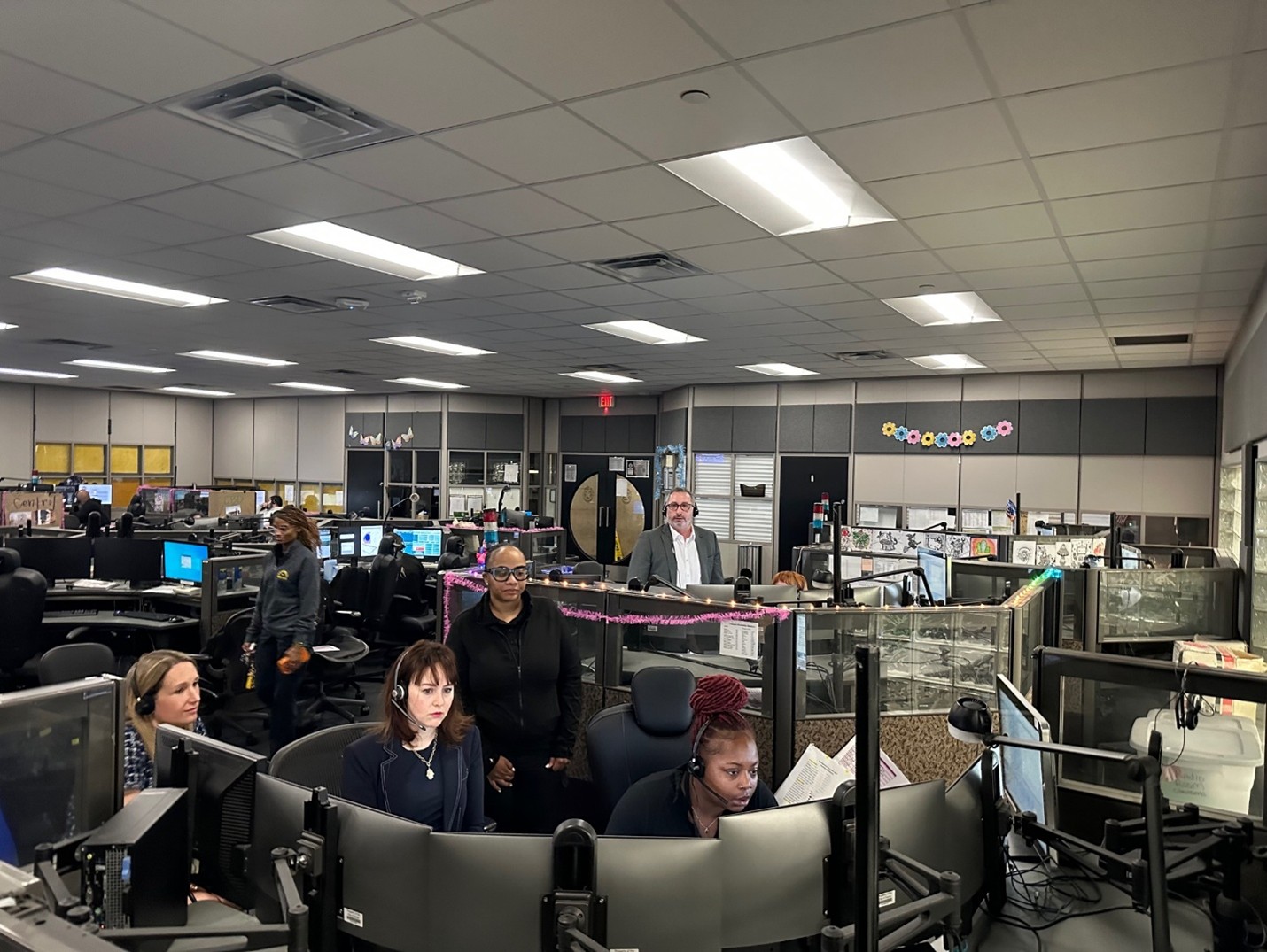
Public safety telecommunicators are often the first point of contact in an emergency, gathering critical information, rapidly triaging evolving situations, and coordinating police, fire, and EMS in real time. They manage multiple calls and radio channels simultaneously while tracking fast-changing details that guide first responders.
In a single shift, telecommunicators may guide a caller through CPR, help someone escape a burning building, or direct responders to a driver trapped in rising water. Their clarity and professionalism save lives.
In Dallas, I watched a call analyst manage an incoming emergency call while tracking another high-priority incident—verifying location, entering critical details into the Computer Aided Dispatch system, and handing off to dispatch within seconds. That efficiency underscores Dallas’ strong record of answering the vast majority of 911 calls within 10 seconds. In Fairfax County, I saw how 9-1-1 operators worked hand-in-hand with the county’s fire, police, and EMS services to transfer calls quickly and effectively, cutting responses times by minutes.
The work is constant; the next call can come at any moment, often before the last one ends.
The Fairfax County DPSC is the County’s 24/7 9-1-1 center and primary public safety answering point. It is the largest 9-1-1 center in Virginia and one of the largest in the country. The center handles approximately 1.2 million calls annually and is staffed by more than two hundred 9-1-1 professionals and specialized support personnel.
For its part, the Dallas 9-1-1 Center manages more than 2.6 million calls each year, including approximately 1.9 million emergency calls and 600,000 non-emergency calls, making it one of the busiest public safety communications hubs in the region.
Across the nation, telecommunicators answer more than 240 million 9-1-1 calls each year, underscoring the scale and urgency of this mission.
But too often, they must operate on systems that were built for a different era. Many 9-1-1 centers still rely on legacy infrastructure that does not seamlessly integrate critical functions like call handling, location verification, and dispatch. As a result, telecommunicators frequently depend on a patchwork of external tools to access essential information, requiring them to manage multiple applications across several screens while handling active emergencies. This fragmentation can introduce inefficiencies into workflows where clarity, speed, and coordination are critical.
These challenges reflect the broader need to modernize the underlying architecture of emergency communications systems. Moving from legacy, circuit-based architecture toward more integrated, IP-based platforms can improve system resilience, streamline operations, and enable more effective coordination within and across jurisdictions.
Many jurisdictions are already taking steps to address these limitations. Fairfax County, for example, is integrating capabilities like real-time transcription and language translation to streamline how information is received and acted upon. Dallas and Fairfax County, like many centers, also continue to use supplemental tools to support operations—illustrating both the progress being made and the constraints of legacy systems that remain in place.
National Public Safety Telecommunicators Week is an opportunity to pause, reflect, and recognize the people who form a critical part of the infrastructure that keeps our nation safe. We owe public safety telecommunicators profound gratitude for the steady judgment, compassion, and resilience they bring to every crisis. Honoring that service also means ensuring they have the modern, reliable systems they need to do their jobs effectively.
This week, and every week, thank you to the telecommunicators who answer the call.