



New NTIA Study Finds Remaining Nationwide Transition Costs for Next Generation 9-1-1 Range from $5.8B to $9.27B
Updated Costs Roughly 30-40% Lower than 2018 Estimate
A new NTIA study released today shows that the estimated cost of implementing Next Generation 9-1-1 (NG911) nationwide has declined since NTIA’s 2018 assessment, reflecting both state investments to date and a broader shift in the market from equipment-based systems to software-driven models with lower upfront costs and recurring subscription-based pricing. As a result, the estimated remaining cost of nationwide implementation has fallen from $9.5 billion to $12.7 billion in 2018 to $5.8 billion to $9.27 billion today—a reduction of roughly 30 to 40% (even more significant after accounting for inflation). This study provides an updated, fact-based assessment of those costs to inform planning and coordination; it does not prescribe policy or assume any particular funding approach.
In 2018, NTIA and the National Highway Safety Administration (NHTSA) released a report to Congress on the potential cost to implement NG911. The report noted that many of our nation’s 9-1-1 systems still rely on legacy, circuit-based technology built for landlines—not mobile devices or data—and often depend on limited, localized routing that can create single points of failure. As a result, wireless calls may be routed based on the nearest cell tower rather than the caller’s actual location, require manual transfers between call centers, and lack the ability to share data beyond voice.
In a multi-vehicle crash near a county line, for example, a call can be misrouted to the wrong 9-1-1 center, delayed by handoffs, and leave first responders with incomplete or inconsistent information. Because legacy systems cannot reliably transmit precise location, move key information about the nature of the emergency with the call, or seamlessly reroute around network disruptions, responders often lack a complete, real-time picture of the emergency situation, resulting in delayed response times when every minute matters.
NG911—the modernization of 9-1-1 to a fully IP-based system—addresses these gaps by enabling faster and more precise location-based call routing and transfers, providing real-time sharing of incident data across 9-1-1 centers and first responders, and reducing outage risk through network redundancy. Because emergency response often involves mutual aid across jurisdictions, these capabilities ensure that 9-1-1 data can move seamlessly to all dispatched responders, regardless of jurisdiction.
The 2018 report, required by Congress as part of the Next Generation 9-1-1 Advancement Act of 2012, included cost estimates for NG911 network deployment, operations, and maintenance, and for the training of first responders to use the new system and its tools. The report, which estimated the cost of a nationwide transition to NG911 at $9.5 billion to $12.7 billion, also informed subsequent legislative efforts to fund NG911 deployment.
In the eight years since the report was issued—and as Congress has continued to debate the issue of NG911—some jurisdictions have made significant infrastructure upgrades and market developments have changed both technology and cost structures. To inform current discussions, NTIA worked with outside experts to produce an updated cost study reflecting changes in technology, deployment models, pricing, recent investments, and emerging AI tools.
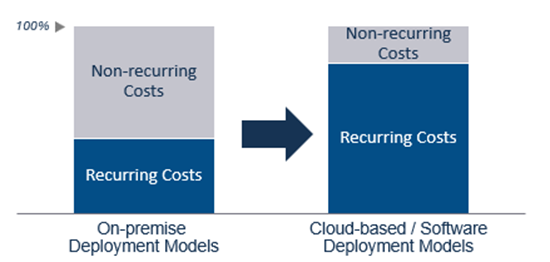
The 2026 study finds that much of the cost of NG911 has shifted from upfront capital expenditures on equipment to recurring operational expenses tied to cloud-based software services. In practice, this means 9-1-1 is increasingly moving to a subscription-based model, with generally lower upfront costs that vary depending on local starting conditions and higher recurring costs than in legacy systems. The 2026 study also found that while several states have made significant progress toward NG911, even the most “mature” systems often lack certain capabilities that would enable a complete end-to-end NG911 network—such as geospatial routing, the ability to transfer calls with accompanying data across jurisdictions, and real-time sharing of incident information with first responders.
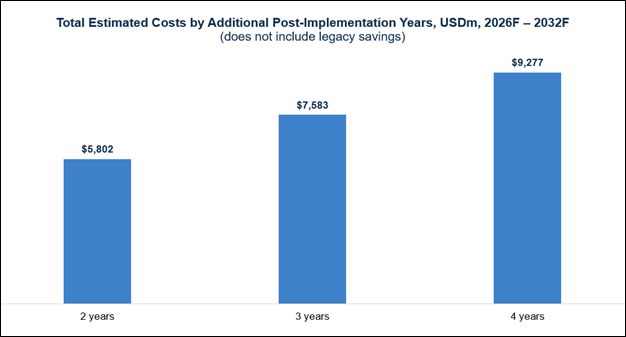
Since the 2018 study, over $4.5 billion has been invested through 9-1-1 fees and state and local investments. After accounting for these investments and current deployment approaches, the 2026 study estimates that complete NG911 implementation nationwide would cost approximately $5.802 to $9.277 billion in additional investment over an estimated seven-year period.
The cost study goes beyond baseline deployment costs to include the infrastructure needed to share call data across jurisdictions, as well as training for public safety telecommunicators. It accounts for modern, cloud-based call-handling services that support faster, more accurate dispatch, including through automated call triage and real-time language translation. It captures costs across the full response chain—from the initial 9-1-1 call through delivery of information to emergency responders in the field.
In other words, the study accounts for both the one-time capital costs needed to establish nationwide NG911 and the recurring costs of cloud-based software services for a baseline year. It then presents a cost range reflecting different assumptions about nationwide costs for operating and maintaining NG911 over subsequent years—modeling scenarios with up to four additional years of recurring expenses during the transition period. The analysis also incorporates six state archetypes, reflecting differences in development stage (early, mid, or late) and whether a state deploys a single ESInet or multiple ESInets, which affects the complexity of sharing data across networks. Finally, the study does not assume a particular funding approach; it simply outlines the estimated cost of nationwide NG911 implementation across different time horizons.
Importantly, the study reflects total costs of nationwide NG911 implementation, not necessarily the cost of a federal share. Decisions about the appropriate federal role—including whether and how long to support recurring expenses and how to differentiate among states, such as by rewarding those further along in their NG911 deployment progress—are outside the scope of the study. Similarly, the study does not include federal administrative costs associated with any grant program.
Looking Ahead
This 2026 study provides a clear estimate of the remaining investment needed to achieve nationwide NG911 and underscores that these costs are phased over time rather than incurred all at once, reflecting the shift from equipment-based systems to software-drive, subscription models.
The findings are intended to inform—not prescribe—decision making. They provide a foundation for planning, funding, and prioritization, including both transition costs and ongoing operations. Unlike the 2018 study, which took several years to complete, this updated estimate was developed in four months. NTIA looks forward to continued engagement with Congress and stakeholders on these findings.
Completing the transition to NG911 will depend on coordinated planning, investment decisions, and sustained implementation across jurisdictions. This study provides an updated baseline to inform those efforts.